Art as a Tool for Communication and Bonding with Your Child
Sitting beside a child with a picture between you can give a conversation somewhere gentle to begin. You can talk about a color, a character or what might happen next. You can also spend a few quiet minutes making marks without talking at all.
The aim is a shared activity, not an interview. These drawing games offer different ways to join in while letting your child decide what their picture means.
Ask to join their idea
Begin with “Would you like to draw together?” If the answer is yes, offer a choice: one shared sheet, two separate pictures or a coloring picture on ColoringBookGames. In the Coloring section, let your child pick an image and select Start once the drawing is ready.
If they prefer to color alone, ask whether they would like company. You can draw beside them on paper. Being together does not require taking over part of their picture.
Pass a paper picture back and forth
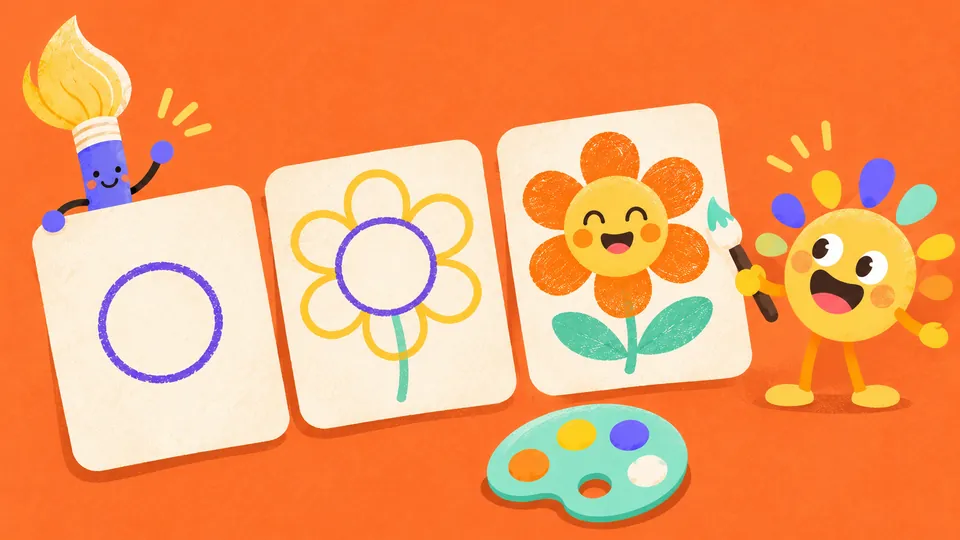
For a shared drawing, start with one simple mark: a curve, a circle or a short line. Pass the paper to your child and invite them to add something. Keep taking turns for as long as it stays enjoyable.
Let each person decide what their own mark will be. If you have different ideas for the picture, try making two versions instead of deciding which idea wins. You could end up with a circle that becomes a moon on one page and a bowl of soup on another.
Use observations before questions
An observation gives your child room to respond or stay quiet. Say, “You’ve put lots of little blue marks here,” then wait. They may tell you about rain, a monster’s fur or something you had not imagined.
If you do ask a question, keep it open: “What would you like me to know about this part?” Avoid guessing what a color reveals about a child’s feelings. A dark sky may simply be a dark sky; the child’s own explanation matters more than an adult’s interpretation.
Give each person a role
During digital coloring, one person can choose a color while the other makes up a story about the picture. Swap roles if your child wants to. On paper, one person might draw a setting and the other add a character.
Some children prefer pointing, showing or making sound effects to answering questions. A roar, a gesture or a chosen color can be part of the game. You do not need to insist on a spoken explanation.
Follow the story without correcting it
Try adding one sentence each to a story about the picture. “The little boat found a door in the sea.” Let your child decide what comes next, even if it changes the story completely.
If they ask you to draw something, check what kind of help they want. You might demonstrate on your own paper, help describe the shape or simply watch while they try. Ask before changing their work.
End with a shared detail
Before putting the materials away, mention something you enjoyed doing together: “I liked hearing where your boat was going,” or “Our line kept turning into new things.” Let your child choose whether to keep the picture or leave it unfinished.
There is no need to make every drawing session a deep conversation. Paying attention, respecting a choice and enjoying a small invention together can be enough for that day.