The Importance of Play in Child Development: How Drawing and Coloring Can Help
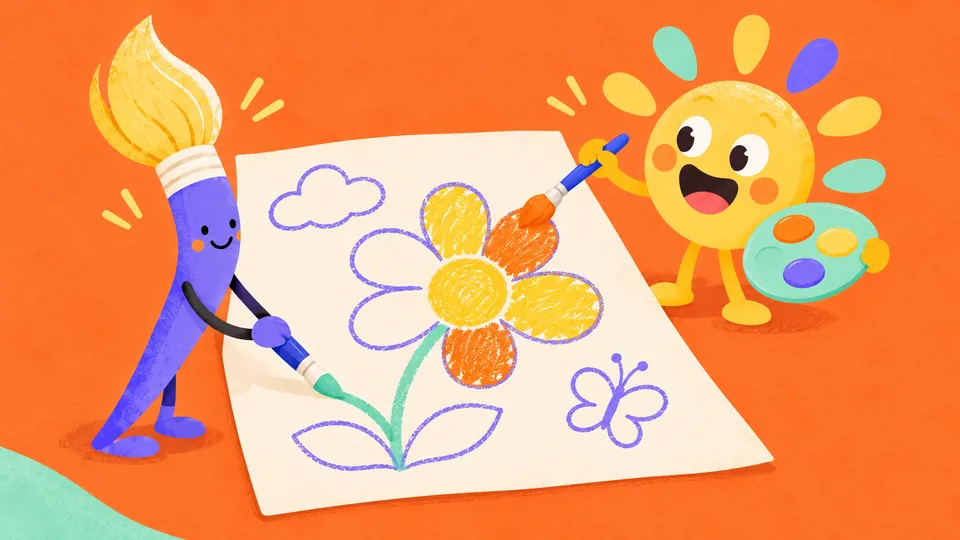
A coloring picture can be the beginning of a game, rather than a task to finish. One person chooses a color, another invents a name for the picture, and suddenly a familiar flower becomes a home for a tiny dragon.
Drawing and coloring give children simple ways to make choices, try ideas and tell you what they are imagining. You do not need to turn the activity into a lesson. A few playful prompts—and time to listen to the answers—are enough to get started.
Start with a picture your child chooses
Open the Coloring section on ColoringBookGames and invite your child to choose a picture. Wait for the drawing to get ready, then tap Start when it appears. Let your child try a color before suggesting a game.
You can also use a sheet of paper and crayons. Keep a second sheet nearby for ideas that reach beyond the picture. Pick just one activity below, and stop or change games when your child wants to. An unfinished picture is a perfectly good place to pause.
1. Play “I spy a shape”
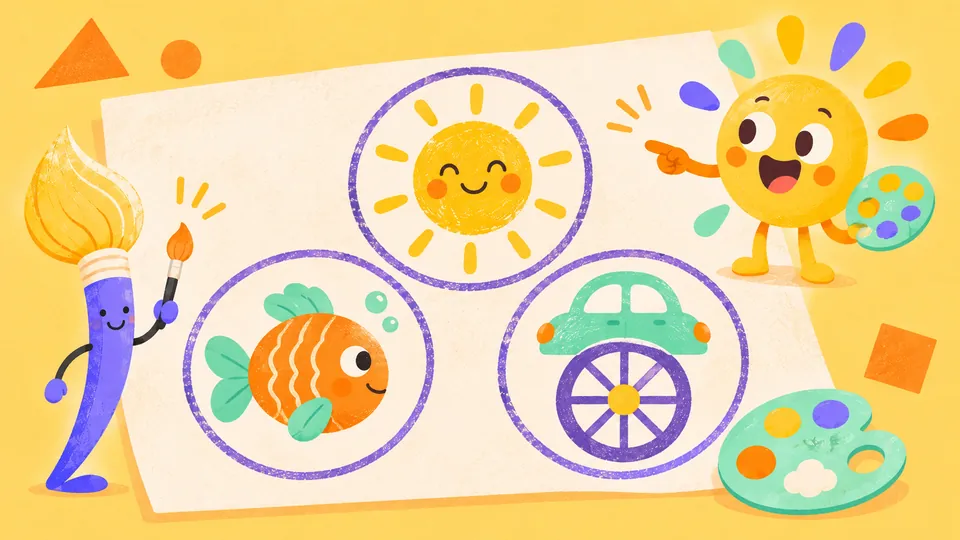
Before coloring, take turns spotting shapes in the picture. You might say, “I spy something round,” and let your child point to a wheel, a face or the middle of a flower. Then swap roles.
Let a surprising answer start a conversation: “I hadn’t noticed that round spot. Show me where it is.” There does not have to be a single correct answer. On paper, draw one of the shapes you found and see what else it could become.
2. Try a three-color challenge
Ask your child to choose three colors for the picture. Each person can suggest where one color might go. A purple leaf or an orange sky is welcome; the game is about making choices together.
After a few turns, ask, “Do you want to keep these colors or add another?” Changing the rule is part of the play. For a child who finds three choices too much, begin with two. A child who wants more can invent a pattern using the colors they picked.
3. Take turns with one small part
Choose a small area of the picture for each turn. Your child colors a part, then hands the next turn to you. Ask before adding your own idea: “Would you like me to use yellow here, or choose a different color?”
If your child wants to do all the coloring, make yourself the storyteller or the color finder instead. Shared play can mean having different jobs. On paper, try taking turns adding one line to a drawing and watch the picture grow in a direction neither of you planned.
4. Give the picture a tiny story
Pause to ask one open question: “Where is this animal going?” or “What happens when this car reaches the hill?” Wait for your child’s answer before adding your own.
Offer to tell the next sentence, then pass the story back. A child can point or make a sound instead of using words. You might finish with a funny title for the picture. There is no need to correct the story or make it realistic.
5. Take an idea off the screen
Choose one detail from the picture and use it to start a paper drawing. A flower might need a garden; a boat might need a sea full of imaginary creatures. Ask your child what belongs around it, and draw alongside them on your own sheet.
You can also look around the room for the colors you used. Find a yellow cushion, a green book or something that almost matches. This makes an easy change of activity when everyone is ready to put the screen aside.
Finish by noticing a choice
Instead of judging whether the picture is neat, describe something specific: “You used orange for every other petal,” or “You changed the story when you added that cloud.” Then invite your child to tell you about a part they enjoyed.
These small games leave room for choosing, observing, taking turns and making up stories. What matters most is that your child has a say in the activity—and that you have a chance to enjoy their ideas together.